2026/08/18
The 2026 (Reiwa 8) Kumamoto Earthquake: Hoping for the Swift Recovery of Local Communities and a Return to Everyday Life
On July 28, Kumamoto was struck by an earthquake registering the maximum intensity of 7 on Japan's seismic intensity scale. Ten years after the 2016 Kumamoto earthquakes, the area was once again hit by a powerful quake just as recovery was well underway. The loss of life, the destruction of homes and livelihoods, the fear of continuing aftershocks, and the ordeal of evacuation in the sweltering heat are too devastating for words. I extend my heartfelt sympathies to all those affected.
The explosion at Aeon Mall Kumamoto in the town of Kashima, which also served as a regional disaster response hub, came as a shock. Many local governments have disaster response agreements with large commercial facilities. In light of this, local governments and facility operators should work together to conduct a thorough review of their disaster preparedness measures and emergency response procedures.
The earthquake is also expected to have a significant impact on the Japanese economy. Kumamoto is a hub for major semiconductor, electronic component, and automotive manufacturing companies, including TSMC (Taiwan Semiconductor Manufacturing Company), Sony Semiconductor Solutions Corp., Renesas Electronics Corp., Tokyo Electron Limited, Mitsubishi Electric Corp., Honda Motor Co., and Aisin Corp. The swift restoration of the affected factories and a reassessment of their business continuity plans (BCPs) are urgently needed.
The government's Earthquake Research Committee has suggested that the latest Kumamoto earthquake may have been caused by a segment of the fault that remained unruptured after the earthquake 10 years ago. Japan is one of the world's most disaster-prone countries, and natural disasters can strike anywhere at any time. I strongly encourage you to take a look at the "Natural Disaster Monuments" map made available by the Geospatial Information Authority of Japan (GSI, the Ministry of Land, Infrastructure, Transport and Tourism). How should we prepare for disasters as communities, as businesses, and as individuals? That is the question we must ask ourselves once again
Reference: GSI Maps (Geospatial Information Authority of Japan)
Yatsushiro City in Kumamoto Prefecture has been one of Japan's leading producers of igusa (rush grass), the material used to make tatami mats, since the Muromachi period (1336–1573). For many years, Yano Research Institute has worked closely with the industry to help revitalize this local specialty and preserve the tradition of tatami—an enduring symbol of Japanese culture—for future generations. It pains us to see the region struck by disaster once again.
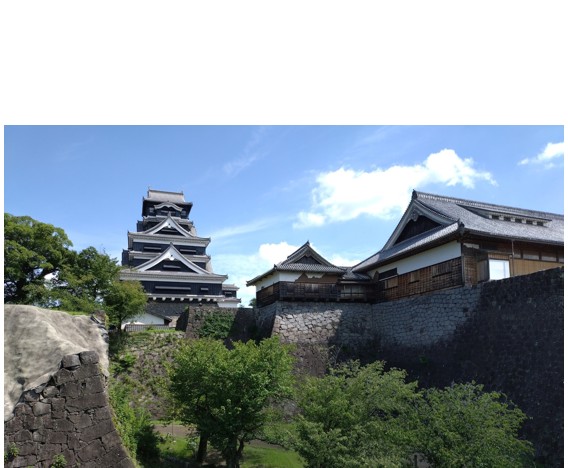
Last year, I visited Kumamoto Castle, which was still undergoing restoration. During my visit, I was told that the restoration was scheduled for completion in fiscal 2052. Sadly, that goal will now almost certainly be delayed. The immediate priority is to help people return to their normal lives and rebuild the affected communities. Beyond that, I sincerely hope that Kumamoto's rich cultural heritage, a source of pride for its people, will be preserved for the future.
Takashi Mizukoshi, the President
This Week’s Focus, July 26 – July 30, 2026