2026/10/13
Liquor Tax Revision Unifies Tax Rates on Beer Products: A New Start for Beer Makers
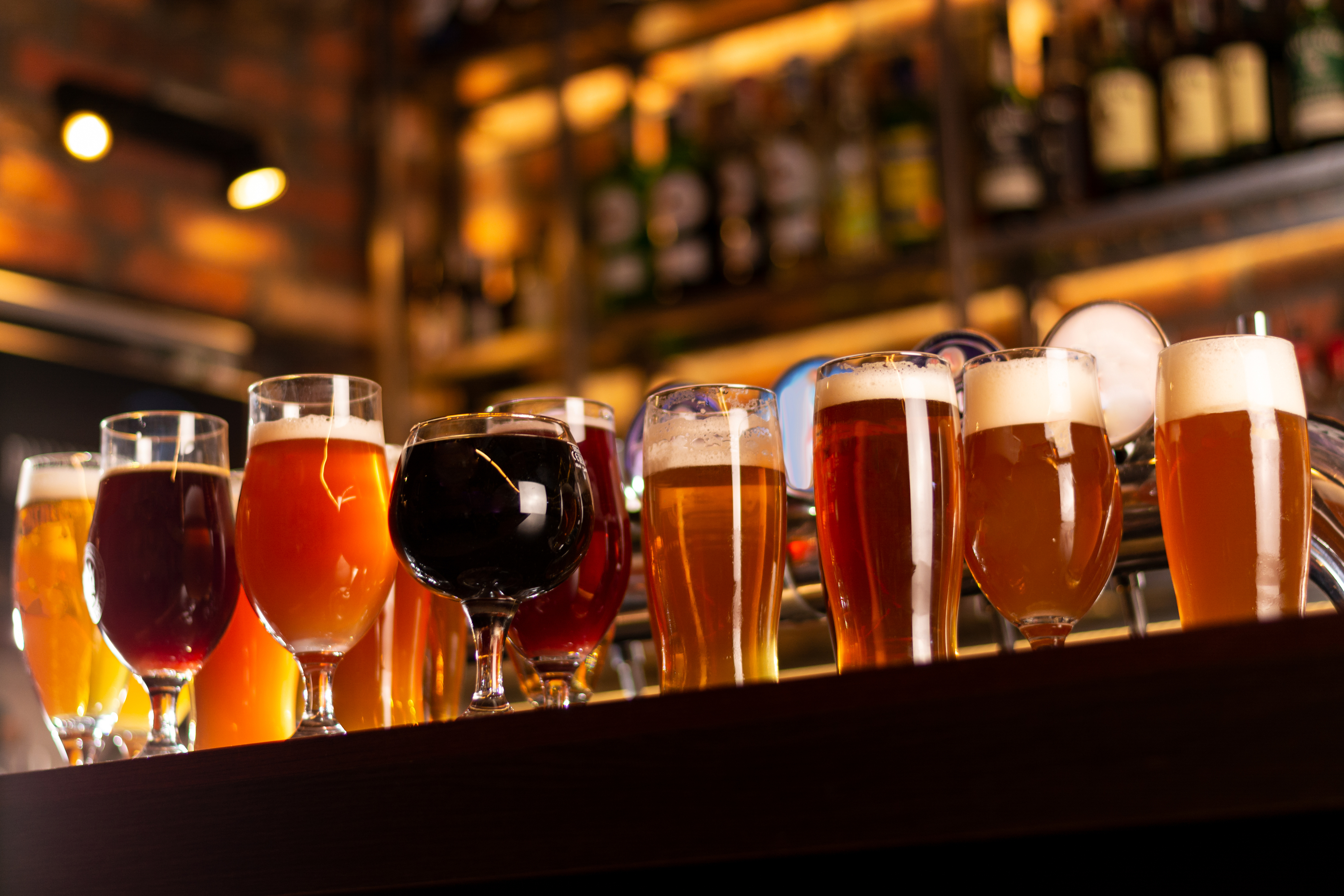
On October 1, the revision of the Liquor Tax Act went into effect, and the liquor tax on beer products was standardized at 54.25 yen per 350-milliliter can. This represents a tax reduction of about 9 yen for regular beer, while the tax on “happoshu” (low-malt beer) and “third-category beer” (the new genre) increases by about 7 yen. Additionally, in Okinawa, the liquor tax reduction on beer produced and shipped within Okinawa under special measures enacted at the time of its return to Japan in 1972 was abolished.
Beer sales by volume peaked in 1994. Since then, amid intensifying price competition, major beer manufacturers have focused on tax rate differences arising from the ratio of malt content and have successively developed happoshu, which captured 30 percent of the beer-products market in 2000 (based on taxable volume, according to data from the National Tax Agency). In 2004, seeking to take advantage of another tax rate difference, they introduced third-category beer, made with soybeans and peas instead of malt, to meet consumer demand for lower prices. Against this background, the government began making phased tax rate adjustments in 2020 under the principle of “neutrality in tax revenues,” recognizing that differences in tax rates between similar alcoholic beverages were affecting product development and sales volume. The current revision marks the final stage of this process.
The beer industry has been taking steps in response to the final tax revision. However, strategies vary by brand. Given that beer-like beverages are subject to a price increase under this revision, some brands are being developed to become much closer to beer, while quite a few others are still being produced using their traditional brewing methods. Companies have sought to differentiate their brands through the unique flavors of happoshu and third-category beer, and also develop markets distinct from “beer substitute demand” by adding functional benefits such as zero carbohydrates, zero purines, and low calories. Their judgment is that there is no rational reason to deliberately make these products more like beer.
Meanwhile, more than 3,000 food items see price increases this October. Happoshu accounts for 44% of the beer category (FY 2024, based on taxable volume). This means that the impact of the tax hike will be significant for consumers who have favored happoshu and third-category beers. The impact on demand is also a concern. The beer- products market has been shrinking for some time. Comparing FY 2024 with the respective peak sales periods for beer and happoshu, the former has declined by 67%, the latter by 27%, and the combined total for the two has fallen by 41%*. Consumers have many options, including distinctive craft beers, RTDs (ready-to-drink beverages, such as canned Shochu highballs and canned highballs), and low-priced private-label products. In addition, the “sober-curious” lifestyle, in which people intentionally choose not to drink alcohol, is becoming more widespread. The era of “Start with a beer, anyway” is over. With tastes becoming more fragmented, needs more diverse, and the trend away from alcohol continuing, what matters is the strength of each individual product.
*The peak volume of beer subject to liquor tax was reached in 1994 at 7,413 thousand kiloliters; for happoshu, it was reached in 2002 at 2,646 thousand kiloliters; and the combined peak volume of beer and happoshu was reached in 1994 at 7,444 thousand kiloliters (according to the National Tax Agency).
Takashi Mizukoshi, the President
This Week’s Focus, September 20– October 1, 2026