2026/07/27
JAXA Succeeds in a Reusable Rocket Experiment; Next Launch of MICHIBIKI No. 7 Scheduled for August 7
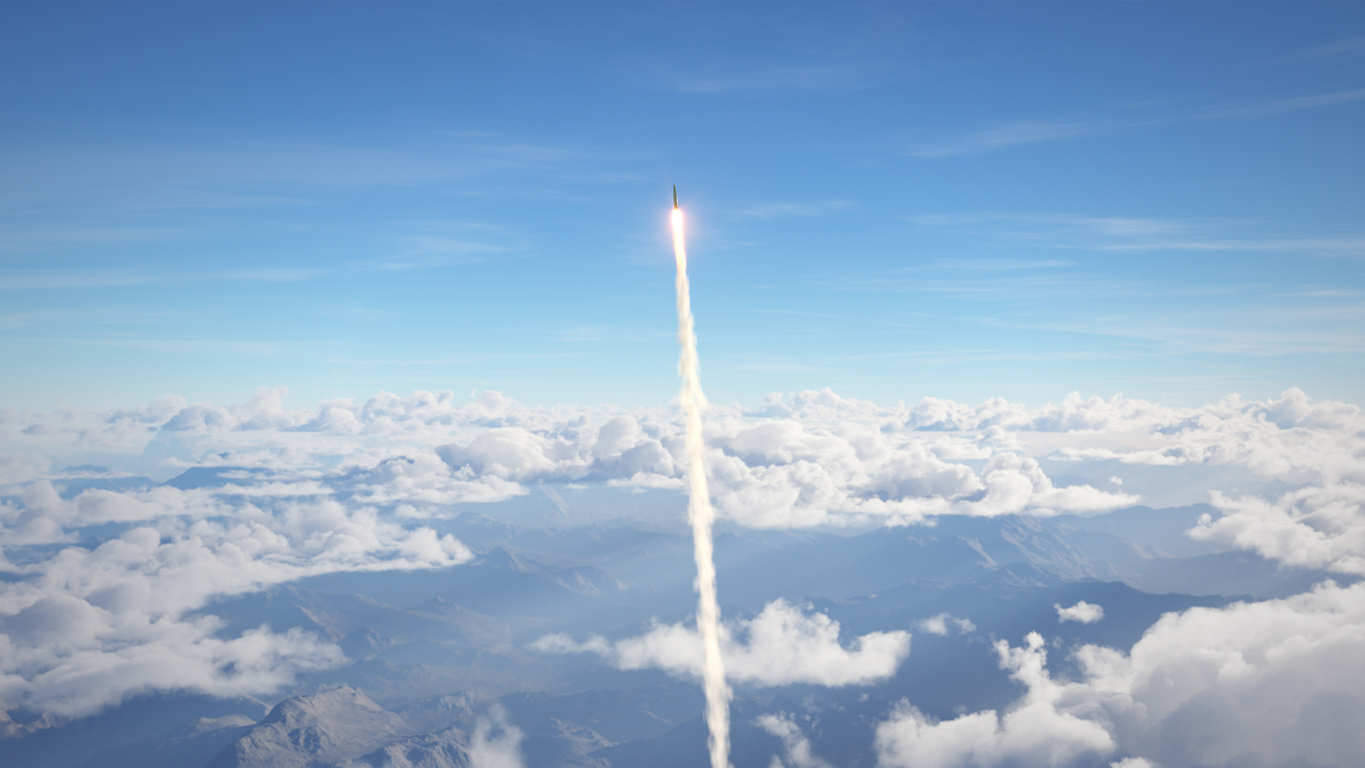
On July 11, the Japan Aerospace Exploration Agency (JAXA) conducted a flight test of the RV-X, a reusable small experimental vehicle developed in partnership with Mitsubishi Heavy Industries, Ltd., at the Noshiro Rocket Testing Center in Akita Prefecture. The vehicle ascended approximately 11 meters, moved about 16 meters horizontally, and then landed at its designated touchdown point as planned. JAXA is working with CNES, the French space agency, and DLR, the German Aerospace Center, on the CALLISTO project to develop technology for reusing the first stage of a rocket. The technologies and flight data obtained through the RV-X test will be fed back into the development of the CALLISTO experimental vehicle, which is scheduled to be launched from the Guiana Space Centre in French Guiana.
SpaceX, led by Elon Musk, and Blue Origin, led by Jeff Bezos, remain well ahead of the rest of the world in the development of reusable rockets. Although Japan still has a long way to go to catch up, Honda Motor Co., Ltd. is also taking on the challenge of developing reusable rocket technology. On June 17, 2025, the company successfully launched a 6.3-meter rocket to an altitude of 271.4 meters at its test site in Taiki, Hokkaido, and landed it safely within 37 centimeters of its target touchdown point. For many viewers, the footage of Honda’s test flight likely brought back fond memories of the dramatic return to base of Thunderbird 1 in the classic British puppet television series “Thunderbirds.” Honda aims to achieve suborbital flight capability by 2029.
Satellite systems for observation, positioning, and communications have become indispensable infrastructure for modern society, and the use of space continues to expand across both developed and developing countries. However, only a limited number of countries and companies are capable of manufacturing satellites, and even fewer possess the capability to launch them into space. Competition in the space transportation market is fierce. Reliable and low-cost launches are essential requirements for commercial viability. In that sense, the successful RV-X test flight marked an important milestone by demonstrating Honda's potential to become a major player in the future space transportation market.
As space applications become increasingly diverse across fields such as weather forecasting, transportation, healthcare, finance, logistics, disaster prevention, and national security, demand for higher accuracy in Global Navigation Satellite Systems (GNSS) is growing even stronger. Japan has operated the Quasi-Zenith Satellite System (QZSS), known as “MICHIBIKI,” since 2018 alongside the U.S. Global Positioning System (GPS) to complement GPS coverage in urban and mountainous areas and provide greater positioning accuracy. I was once involved in the “Kiku 8 (ETS-VIII)” project, the predecessor of MICHIBIKI, where I conducted research into potential applications of satellite technology. As one of its longtime friends here on Earth, still looking up at it far away, I eagerly await the day when MICHIBIKI will provide standalone positioning through its seven-satellite constellation. The launch of MICHIBIKI No.7* aboard H3 Launch Vehicle Flight No. 9 is scheduled for Friday, August 7, between 4:30 a.m. and 6:00 a.m. I sincerely hope for a successful launch.
*MICHIBIKI No. 5 was lost following the failure of H3 Launch Vehicle Flight No. 8, and the system is currently operating with five satellites.
Takashi Mizukoshi, the President
This Week’s Focus, July 12 – July 16, 2026