2026/06/08
Moon Base Plans by the U.S. and China: Keep Earth's Power Struggles Out of Space
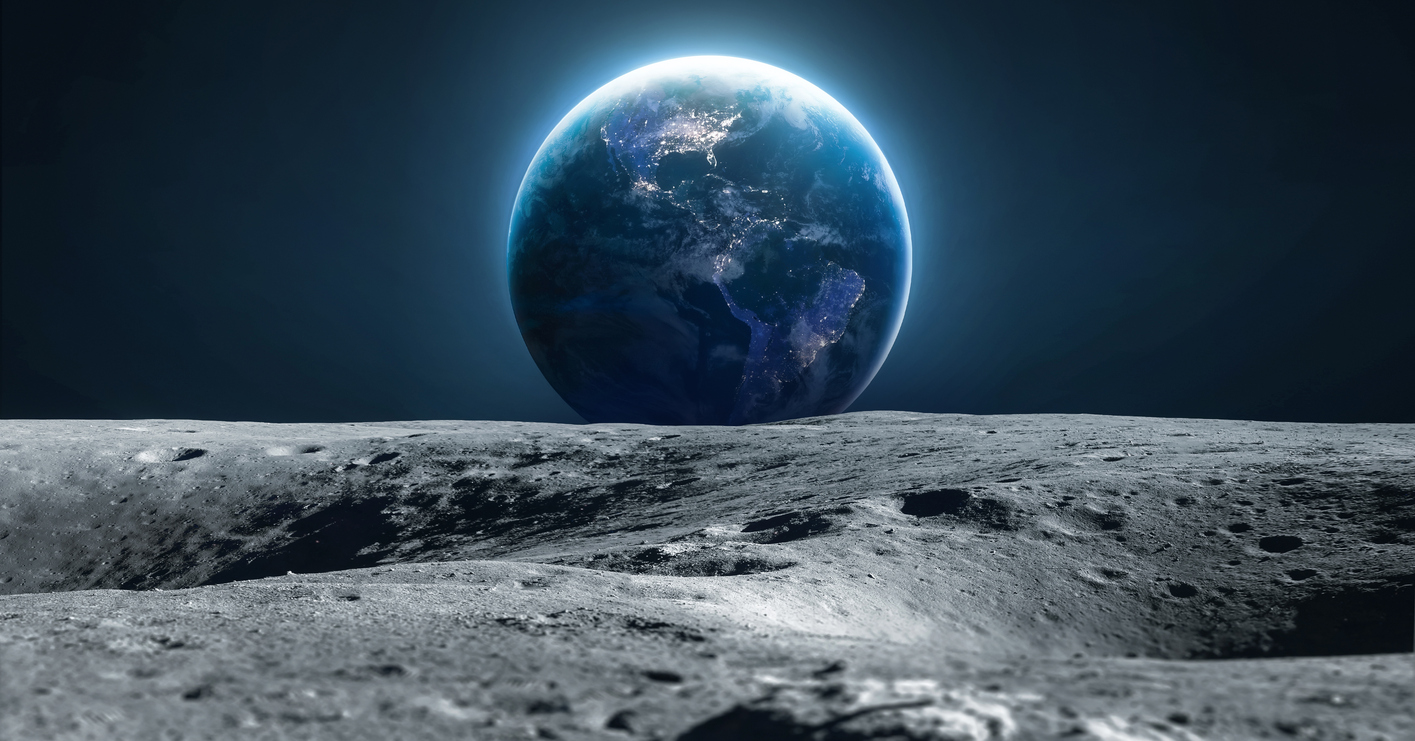
On May 26, space venture ispace, inc. and the Japan Airlines Group (JAL) announced a payload transport service agreement for ispace's planned lunar landing mission in 2028. The project, named the "ARGO PROJECT" — subtitled A Heritage Ark for the Next Generation — aims to preserve records of human culture and civilization on the Moon, where they would be safe from the destruction of disasters and conflicts on Earth, and pass them on to future generations. As part of the initiative, the JAL Group will sell payload slots to local governments and corporations, transporting regional specialty products and iconic industrial goods of our era to the lunar surface.
But can the Moon truly escape the "risk of conflict on Earth" that the ARGO PROJECT envisions? On May 24, China successfully launched Shenzhou‑23 carrying three astronauts, and on the 25th, the spacecraft docked with the Tiangong space station. China plans to achieve a crewed lunar landing by 2030 and, in the mid-2030s, to build a lunar base jointly with Russia. The very next day, the United States released its roadmap for the Artemis Program — its crewed lunar exploration initiative — announcing plans to survey construction sites by 2029 and build large-scale habitation facilities on the Moon in the 2030s.
The competition is not limited to the Moon. The U.S.-China rivalry in outer space is intensifying across the board. The United States already operates between 7,000 and 9,000 satellites, including SpaceX's Starlink satellite constellation. China, currently operating around 1,000 satellites, has announced plans to deploy 15,000 Low-Earth orbit satellites by 2030. That said, the Outer Space Treaty — which entered into force in 1967 — explicitly states in Article II that outer space, including the Moon and other celestial bodies, "is not subject to national appropriation by claim of sovereignty." Yet at a time when trust in international law is already eroding here on Earth, its authority in space seems even more uncertain.
In 2010, British astrophysicist Stephen Hawking (1942–2018) acknowledged that the existence of extraterrestrial life was highly probable, but issued a stark warning: if such beings were ever to visit Earth, it would likely be after exhausting the resources of their own planet — arriving to claim ours as a new source of raw materials and a new place to settle. "Just as Columbus's arrival in the Americas proved disastrous for the indigenous peoples," he cautioned, "contact with a superior alien civilization could prove equally unwelcome for humanity." Meanwhile, Mamoru Mohri — the first Japanese astronaut to fly aboard the Space Shuttle — once reflected, "From space, I could not see any national borders." Must humanity truly wait until Hawking's fears become reality before we finally become one, as Mohri's words suggest we could be? I would like to think we are capable of something wiser than that.
Takashi Mizukoshi, the President
This Week’s Focus, May 24 – May 28, 2026