2026/04/28
Toward Sustainable Regional Revitalization: Breaking Away from Nationwide Uniformity
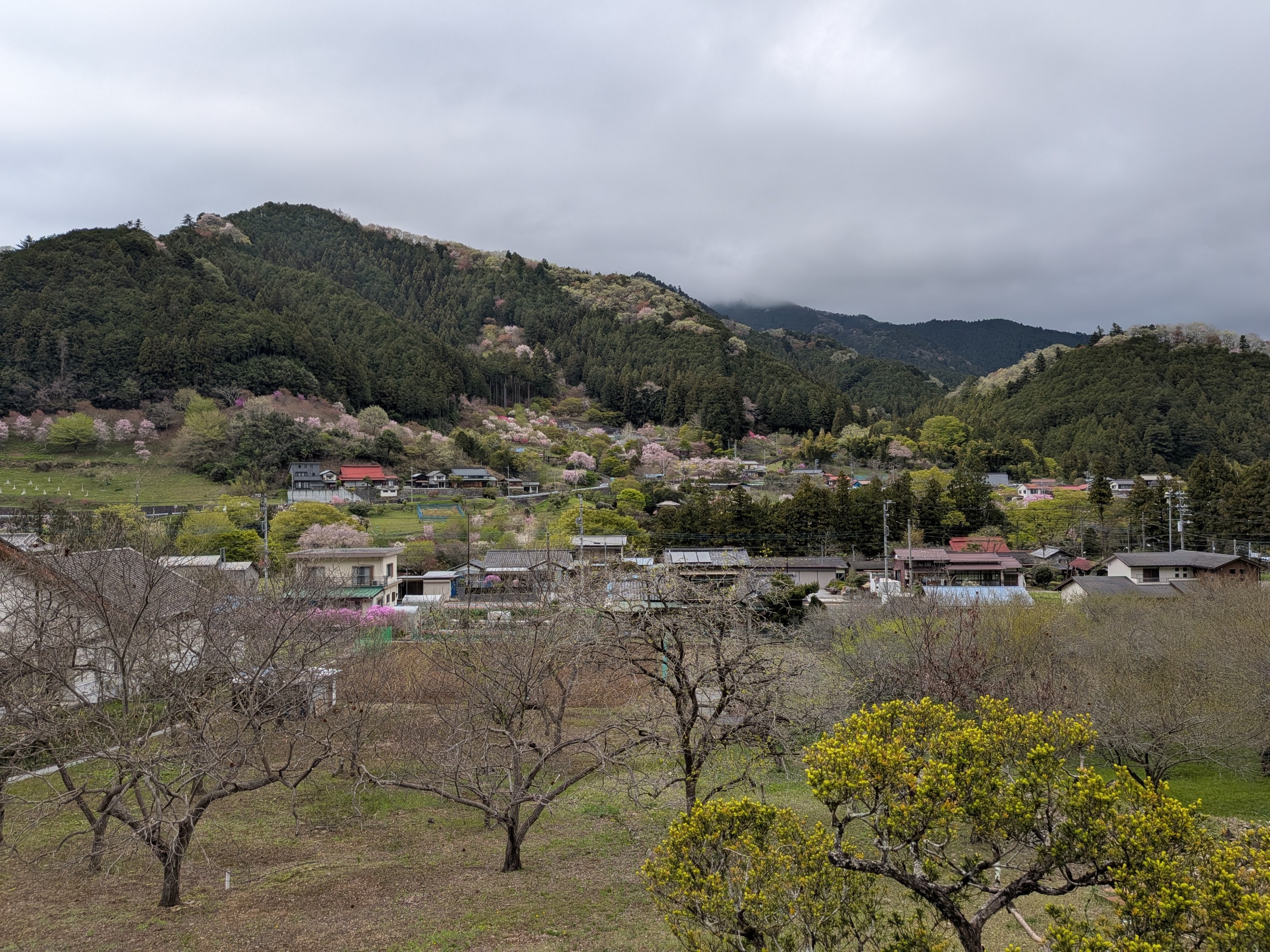
Photo: A rural landscape (satoyama) in the Otsu district of Akiruno, Tokyo. Taken by the author.
On April 14, Tokyo Governor Yuriko Koike voiced objections to the national government’s policy on correcting disparities in local allocation tax, saying, “The system has fundamental problems.” Under the current system, the “standard” administrative services that local governments are expected to provide are calculated according to a uniform national benchmark, which effectively serves as a ceiling, and the gap between the calculated amount and projected local revenues is covered by fiscal transfers. As a result, when a municipality succeeds in reducing expenditures or increasing its own revenues through its efforts, the gap narrows—and the local allocation tax transfers decline. This mechanism can indeed dampen incentives for reform. At the same time, Tokyo’s advantages reflect the concentration of capital and population from across Japan and abroad, and cannot be attributed solely to the achievements of the metropolitan government. While reform of the current system is certainly necessary, Tokyo, as the nation’s capital, should also engage in discussing a broader vision for the country’s future.
Since the period of rapid economic growth, the guiding principle of national land development has been “balanced development across Japan.” Yet the overconcentration of population and industry in Tokyo has not been corrected, and regional disparities have continued to widen. Even local governments have come to recognize the limitations of budget allocation policies controlled by the central government. That said, the national and local governments remain locked into the mindset of spatial uniformity. What is needed first is a shift away from this fixed thinking. Government initiatives point the way forward for regional revitalization: The Grand Design of National Spatial Development towards 2050 (2014, Ministry of Land, Infrastructure, Transport and Tourism) advocates a dynamic network in which urban and rural areas complement one another, while “Regional Revitalization 2.0” (2025, Ishiba Cabinet) seeks to build economically self-sustaining regions tailored to local characteristics on the premise of population decline. How these initiatives are carried forward and how each region builds on its “unique strengths” will be the key determinant.
Last week, I had the opportunity to visit Akiruno City, on the western outskirts of Tokyo, where Tokyo Yamagawa DMC Co., Ltd. organizes nature experience programs. I had first encountered the company at the “Tama Mirai Industrial Fair,” where I met two of its senior members: Hiroki Sakurazawa, affectionately known as “Saku-chan,” a master of leisurely wandering, and Yoshikatsu Nishikawa, who has completed training in Shugendo (a traditional Japanese spiritual practice involving training in the mountains.) They kindly showed me around the Akigawa River basin in Akiruno. During the visit, I learned that the area is home to a rare geopark where multiple geological layers overlap, including the Chichibu Zone (formed roughly 300 to 150 million years ago), the Shimanto Zone (110 million to 70 million years ago), and the Itsukaichi Basin, consisting of strata formed about 15 million years ago when the Japanese islands were forming. These distinct geological layers have contributed to shaping the area’s unique landscape and the traditional ways people have lived there.
For Tokyo Yamagawa DMC, “community building” begins with an understanding of the fudo (unique natural and cultural environment rooted in a region.) The company ultimately aims to uncover the value embedded in this fudo, cultivate people capable of translating it into viable businesses, and build a decentralized, self-sustaining network (in which local players act independently yet remain connected) through collaboration with local governments, DMOs (Destination Management Organizations), and DMCs (Destination Management Companies) across Japan. The company’s inquiry-based nature experience programs attract more than 30,000 participants each year. These diverse programs, which foster independent judgment and the strength and adaptability needed to navigate life, are also widely adopted for corporate training. I would like to highlight and support the company’s regional revitalization efforts, which reconnect urban and rural areas by focusing on the regeneration of fudo.
Reference: About Tokyo Yamaside DMC – 東京山側DMC
*On Sunday, June 28, Tokyo Yamagawa DMC will host a “traditional Shinto-style rice-planting ceremony” in a paddy field in Itsukaichi, Akiruno, Tokyo. If you're interested, feel free to join the event. For more details, please visit the website below.
Takashi Mizukoshi, the President
This Week’s Focus, April 12 - April 16, 2026