2025/12/29
Four Shipbuilders and Three Shipping Companies Collaborate on Next-Generation Vessel Design to Revive Japan’s Shipbuilding Industry
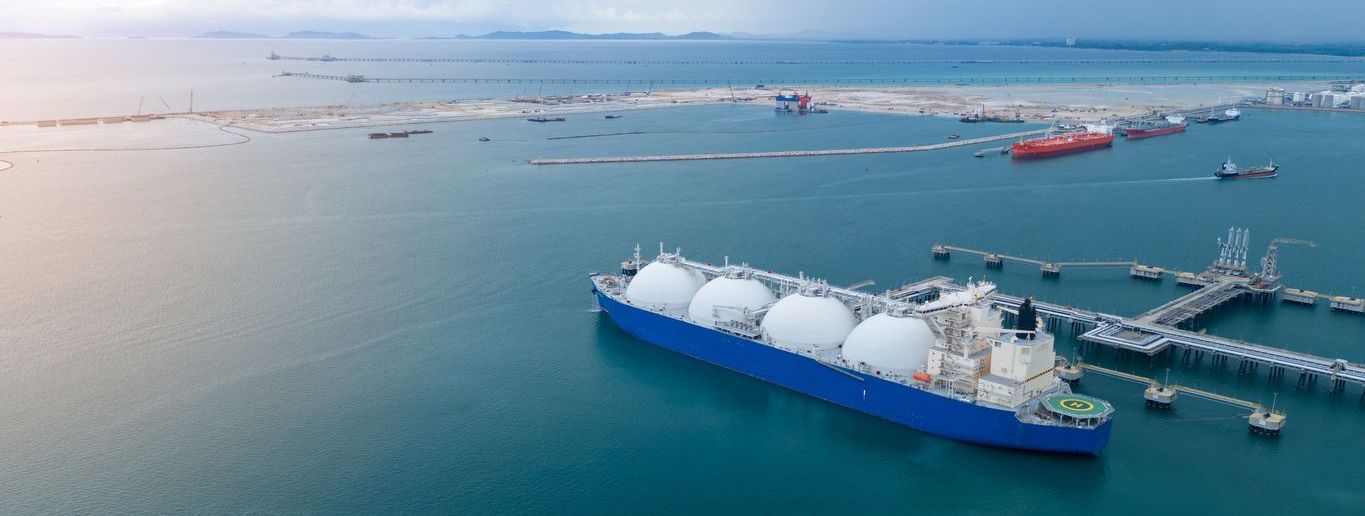
On December 1, seven Japanese companies ---Mitsubishi Shipbuilding Co., Ltd., Imabari Shipbuilding Co., Ltd., Japan Marine United Corporation (JMU), Nihon Shipyard Co., Ltd. (NSY), Nippon Yusen Kabushiki Kaisha (NYK Line), Mitsui O.S.K. Lines, Ltd. (MOL), and Kawasaki Kisen Kaisha, Ltd. ("K" LINE) ---concluded a Memorandum of Understanding with MILES Co., Ltd., a ship design company jointly funded by Mitsubishi Heavy Industries, Ltd. and Imabari Shipbuilding. The agreement aims to establish a standard design framework for liquefied CO₂ (LCO₂) carriers and next-generation alternative-fuel vessels incorporating decarbonization technologies. In addition, JMU, NSY, and the three shipping companies have decided to invest in MILES Co. This all-Japan, industry-wide alliance of four shipbuilders and three shipping companies seeks to enhance international competitiveness in the next-generation ship market.
Two weeks earlier, on November 18, the Japan Fair Trade Commission (JFTC) approved Imabari Shipbuilding’s proposed acquisition of a 60% stake in Japan Marine United (JMU), a transaction that will make JMU its subsidiary. The antitrust review examined whether the deal would restrain competition through a horizontal combination in the merchant shipbuilding market, and through a vertical combination arising from Imabari Shipbuilding’s holding a 35% stake in marine engine manufacturer, Hitachi Zosen Marine Engine Co. Ltd. The JFTC concluded that neither posed a risk of a substantial restraint of competition. For the former, owners of ocean-going vessels place orders without distinguishing between domestic and overseas shipbuilders; for the latter, potential concerns could be addressed by imposing information-firewall measures on JMU.
China now overwhelmingly dominates the global shipbuilding market. In 2024, China accounted for 71% of global shipbuilding orders by volume, compared with 14% for South Korea and 8% for Japan (based on contract year; Maritime Bureau, Ministry of Land, Infrastructure, Transport and Tourism). Advances in shipbuilding technology in China have also been remarkable. Chinese companies are emerging as a force even in the LNG carrier segment, long led by South Korean shipbuilders. Approximately 90% of new orders secured by Chinese shipbuilders are for export, reflecting China’s dominance in the overseas shipping market.
Two days after the approval of Imabari Shipbuilding’s investment in JMU, the JFTC published the Basic Principles Underlying the Antimonopoly Act as Applied to Business Initiatives Related to Economic Security. In the document, the JFTC cited the shipbuilding and marine equipment industries as examples of sectors in which domestic companies are unable to maintain competitiveness on their own in the global market. It described a model in which a platform company assumes collective responsibility for sales, design, and procurement, while product manufacturing is shared among participating companies. This description corresponds precisely to the business model of MILES Co. outlined above. Incidentally, Nihon Shipyard is a joint venture between Imabari Shipbuilding and JMU. In practical terms, therefore, the success or failure of the business initiative by the seven-company alliance, together with MILES, may hinge largely on Imabari Shipbuilding. Accordingly, high expectations are placed on Imabari’s status as a non-listed company, which allows it to pursue a long-term strategy while retaining the swift decision-making characteristic of owner-managed businesses.
Takashi Mizukoshi, the President
This Week’s Focus, November 24–December 4, 2025