2025/12/15
As COP30 Starts, Restoring Trust in Multilateralism Becomes Even More Urgent Ten Years After Paris
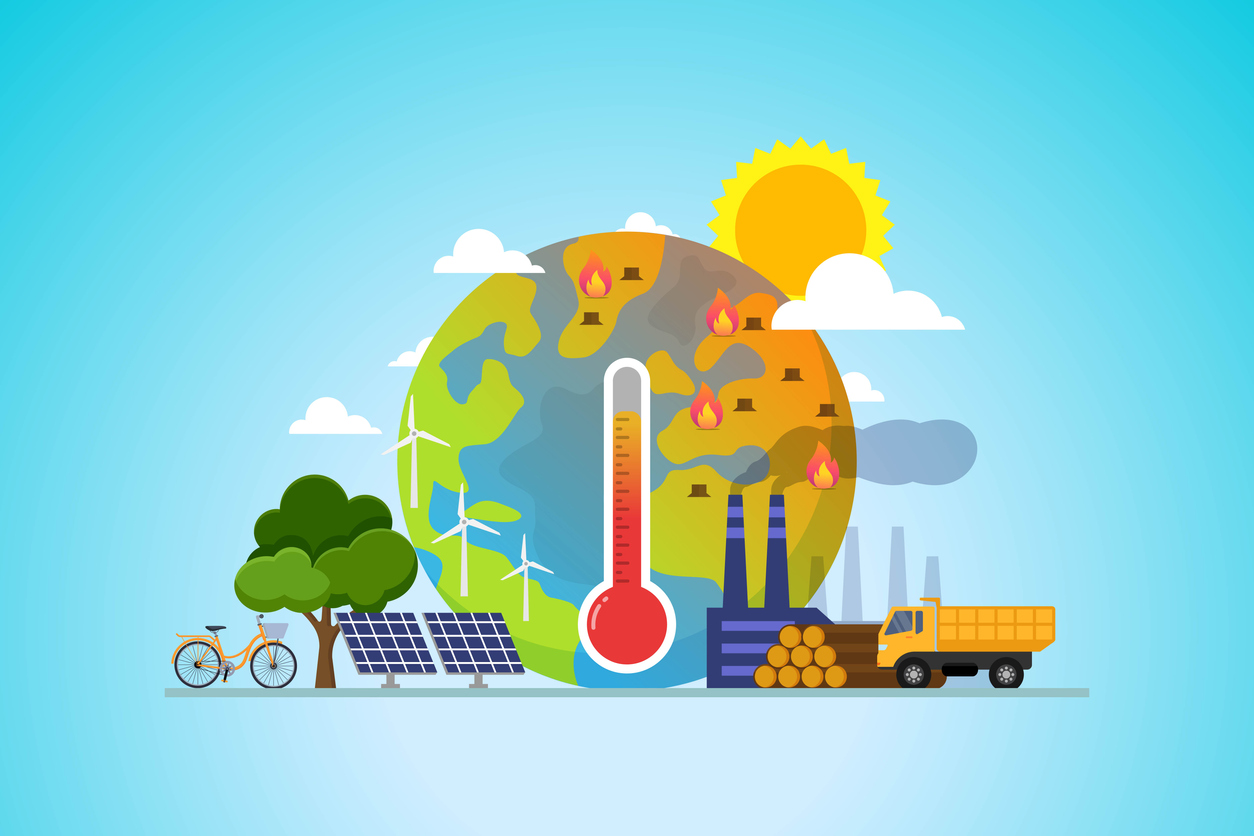
On November 10, the 30th Conference of the Parties to the United Nations Framework Convention on Climate Change (COP30) opened in Brazil, with sessions running through November 21. Ten years have passed since the Paris Agreement (adopted at COP21 in 2015), which set the goal of limiting global temperature rise to 1.5°C above pre-industrial levels. Unfortunately, many countries’ efforts are falling behind. According to the United Nations Environment Programme (UNEP), global greenhouse gas emissions increased by 2.3% in 2024. Even assuming that all countries fulfill their existing pledges, global temperatures are still projected to rise by 2.3°C to 2.5°C.
As extreme weather events increasingly escalate into full-scale disasters around the world, UN Secretary-General António Guterres warns that “the crisis is accelerating.” Meanwhile, for President Trump—who has long claimed that climate change is “the greatest con job ever perpetrated on the world” — withdrawing from the Paris Agreement is essentially a foregone conclusion. It will not be easy to realize the COP29 agreement to mobilize USD 1.3 trillion in public and private climate finance for developing countries by 2035 without U.S. participation. COP negotiations often reveal differences in the interests of developed and developing countries. This makes coordination among developed countries, particularly on climate finance, directly tied to the overall progress—or regression—of global climate action.
Following Trump’s comments, social media is flooded with claims questioning climate change. However, the current global temperature rise is occurring ten times faster than natural climate cycles that repeat over periods of 20,000 to 100,000 years (National Institute for Environmental Studies, Japan). The transition from the current interglacial period to the next ice age is estimated to occur more than 50,000 years later than theoretical values calculated from solar radiation variations suggest (A. Ganopolski et al.). The Intergovernmental Panel on Climate Change (IPCC) likewise concludes that the rapid warming observed since the latter half of the 20th century cannot be explained without human influence. There should be no question about the need to act to bring the climate back onto a stable, natural trajectory.
Environmental issues also shape a country’s industrial policy from a strategic perspective. On October 9, China’s leading EV manufacturer BYD announced, at the completion ceremony of its new factory in Brazil, the introduction of plug-in hybrid vehicles fueled by sugarcane-based bioethanol—an energy source promoted as a national policy by the Brazilian government. BYD emphasized both environmental and economic benefits. Japan, for its part, has set up the “COP30 Japan Pavilion,” organized by the Ministry of the Environment, to showcase advanced Japanese technologies for decarbonization and climate adaptation. Such healthy competition is welcome.
As trust in multilateralism wavers, Pope Leo XIV appealed that “the climate is a common good, and we should put aside selfish interests, bearing in mind the responsibility for one another and for future generations.” I hope to see courageous compromises and ambitious action plans from all countries.
Takashi Mizukoshi, the President
This Week’s Focus, November 9–13, 2025