No.4078
Sporting Goods Market in Japan: Key Research Findings 2026
Estimated Domestic Sporting Goods Market Size (Based on Shipment Values) Valued at 1.73131 Trillion Yen in 2025, a 3.1% Year-over-Year Increase
Yano Research Institute (the President, Takashi Mizukoshi) surveyed the domestic sporting goods market. The survey revealed market trends by product segment, the trends among market players, and future outlook.
Market Overview
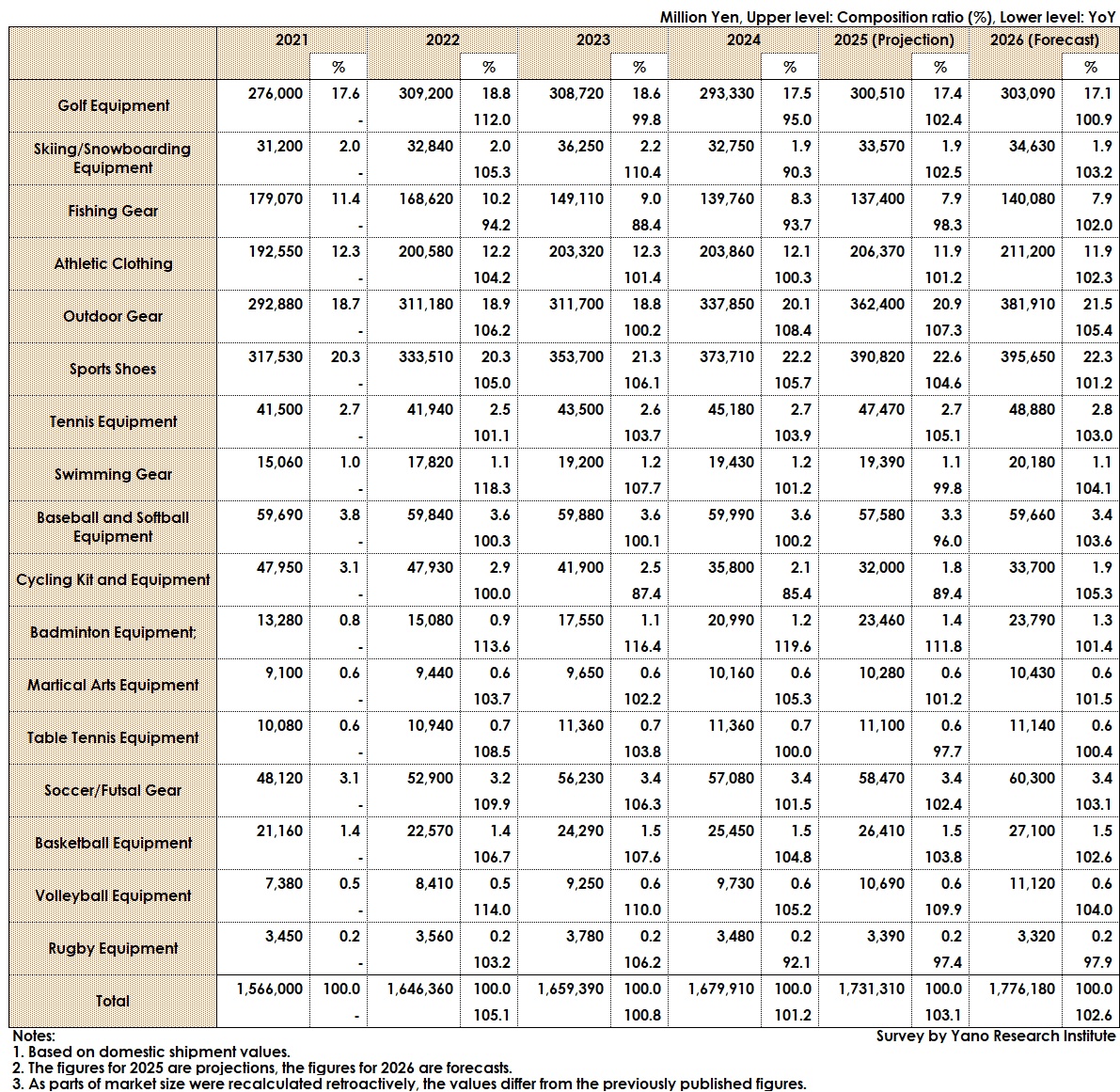
Based on shipment values, the domestic sporting goods market is expected to reach 1.73131 trillion yen in 2025, a 3.1% increase from the previous year.
However, amid the declining population, it has become difficult to increase demand for sporting goods. Nevertheless, the weaker yen and rising material prices have prompted many manufacturers to raise their list prices, which increased the average unit price. Consequently, the market size by value increased as many categories exceeded the previous year’s values, though they failed to reach the previous year’s volumes.
The two largest categories, outdoor gear and sports shoes, performed relatively well by incorporating demand for lifestyle goods. As these categories significantly increased their shipment values, they boosted the entire sporting goods market.
Noteworthy Topics
Increased Demand from Inbound Tourists
Now that the number of foreign tourists has exceeded 40 million for the first time, the demand for sporting goods among these tourists is rising (source: Japan National Tourism Organization). Purchases are driven by the Japanese original product lineups in large-scale stores near tourist attractions, outlet malls, and urban, manufacturer-owned shops and specialty stores. Multi-purpose shoes and lifestyle items, including clothing, and J League replica uniforms are selling particularly well. Replica J League soccer uniforms are popular among visitors from Southeast Asian countries.
Future Outlook
Domestic shipments of sporting goods are expected to reach 1.77618 trillion yen in 2026, which is a 2.6% year-over-year increase. Sixteen of the seventeen categories are expected to grow from 2025 onward, with the exception of rugby equipment. However, only the outdoor category is likely to attain a growth rate of at least 5%. This category has led the sporting goods market ever since the pandemic ended. This trend is expected to continue in 2026.
Research Outline
2.Research Object: Sporting goods manufacturers, importers, wholesalers, and retailers
3.Research Methogology: Face-to-face interviews (including online interviews) by our expert researchers, survey via telephone, and mailed questionnaire
The Sporting Goods Market
This research defines the sporting goods market as the following seventeen categories: Golf Equipment; Skiing and Snowboarding Equipment; Fishing Gear; Athletic Clothing (Training Wear and Lifestyle Wear, i.e., Casual Clothes); Fitness Clothing; Field and Athletic/Running Clothing; Outdoor (Clothing, Shoes, and Camping Gear); Sports Shoes (Running Shoes, Walking Shoes, and Multi-Purpose Shoes which include Sneakers, Children’s Shoes, and Training Shoes which include Fitness Shoes, and Sports Sandals); Tennis Equipment; Swimming Gear; Baseball and Softball Equipment; Cycling Kit and Equipment; Badminton Equipment; Martial Arts Equipment; Table Tennis Equipment; Soccer and Futsal Gear; Basketball Equipment; Volleyball Equipment; and Rugby Equipment. Market size was calculated based on domestic manufacturer shipment values.
<Products and Services in the Market>
Golf Equipment; Skiing and Snowboarding Equipment; Fishing Gear; Athletic Clothing (Training Wear and Lifestyle Wear, i.e., Casual Clothes); Fitness Clothing; Field and Athletic/Running Clothing; Outdoor (Clothing, Shoes, and Camping Gear); Sports Shoes; Tennis Equipment; Swimming Gear; Baseball and Softball Equipment; Bicycle Sports Gear; Badminton Equipment; Martial Arts Equipment; Table Tennis Equipment; Soccer and Futsal Equipment; Basketball Equipment; Volleyball Equipment; and Rugby Equipment.
Published Report
Contact Us
The copyright and all other rights pertaining to this report belong to Yano Research Institute.
Please contact our PR team when quoting the report contents for the purpose other than media coverage.
Depending on the purpose of using our report, we may ask you to present your sentences for confirmation beforehand.