2026/03/30
Fifteen Years Since the Great East Japan Earthquake: How Have We Spent This Time?
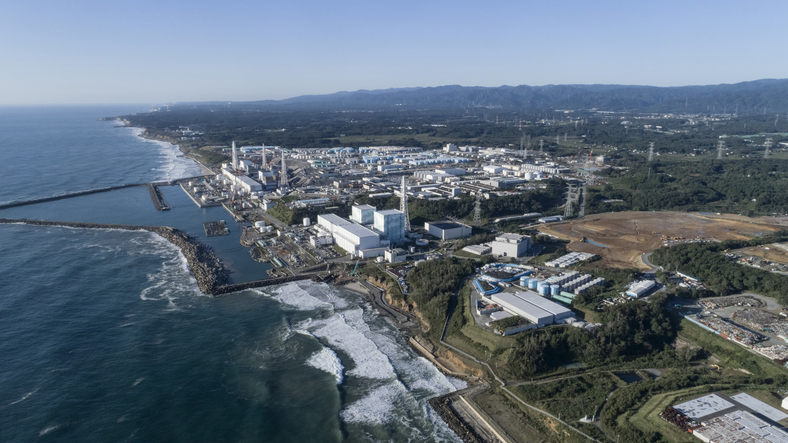
Fifteen years and one day have passed since the Great East Japan Earthquake. A total of 41.5 trillion yen has been invested in reconstruction. Infrastructure rebuilding is nearly complete, and shipment value of manufactured goods has surpassed pre-disaster levels. Ninety-six percent of the farmland damaged by the tsunami has become cultivable again. Initiatives such as the Fukushima Innovation Coast Framework are under way to establish bases for advanced technology development. Even so, the lives and futures of 19,782 victims and 2,550 people who remain missing can never be reclaimed. The region continues to face numerous challenges, including population decline and the aging of communities. Still, over these fifteen years, the affected areas have been carving out a new chapter in their history.
The most challenging issue remains the nuclear disaster. The retrieval of an estimated 880 tons of nuclear fuel debris has proven extraordinarily difficult. To date, only 0.9 grams have been successfully sampled for testing. The government’s goal of decommissioning the reactors by 2051 remains uncertain. In August 2023, the discharge of treated water into the ocean began. Over two years, 133,000 tons were released; subtracting newly generated treated water, the net decrease was about 81,000 tons, leaving 1.266 million tons still stored in tanks (as of February 26, 2026, according to TEPCO). By law, the decontaminated soil stored in interim facilities within Fukushima Prefecture is supposed to be transferred outside the prefecture for final disposal by 2045. Yet, no candidate site has been identified. Only 53% of the farmland affected by nuclear contamination has resumed cultivation, and coastal fishery yields remain at 26% of pre-disaster levels. Of the 27,000 people still unable to return home, 24,000 are evacuees from Fukushima (Reconstruction Agency).
Over these fifteen years, the determination we once shared — to fundamentally rethink the structure of our society — seems to be fading. Examples of this fading resolve can be seen in several recent policy moves. The ruling party, for instance, has included in its tax reform outline a plan to redirect one percentage point of the 2.1% “Special Income Tax for Reconstruction” (originally imposed to finance disaster recovery and set to expire in 2037) toward the defense budget starting in fiscal 2027. The reduced revenue for reconstruction will be offset by extending the tax period by ten years. Furthermore, last year the government’s Strategic Energy Plan dropped the phrase “reduce nuclear dependence as much as possible,” and the Ministry of Education, Culture, Sports, Science and Technology also reduced its budget request for basic research related to reactor decommissioning from 5.251 billion yen to 4.673 billion yen — roughly a 3% cut in actual terms.
On March 3, the government approached Ogasawara Village, Tokyo, to propose conducting a literature survey as part of the process of selecting a site for the final disposal of high-level radioactive waste. In Finland, construction of the repository Onkalo, scheduled to begin operations in 2026, assumes a design lifespan of 100,000 years. What legacy will we leave for future generations stretching beyond such an unimaginable span of time? We should once again reflect on the words of Oren Lyons of the Onondaga Nation, a Native American people: “In every political decision, we should keep in mind the seventh generation yet to come, so that those who will be born may not live in a worse world than ours. That is something we must never forget.”¹
¹ From Follow Your Own Path (Japanese title Soredemo Anata no Michi o Ike; original title Native Wisdom), edited by Joseph Bruchac; Japanese edition translated by Shinichi Nakazawa and Yugo Ishikawa, Merkmal Publisher.
Takashi Mizukoshi, the President
This Week’s Focus, March 6–12, 2026